Cat Dental Care: How to Brush Teeth, Spot Disease & Choose Safe Products
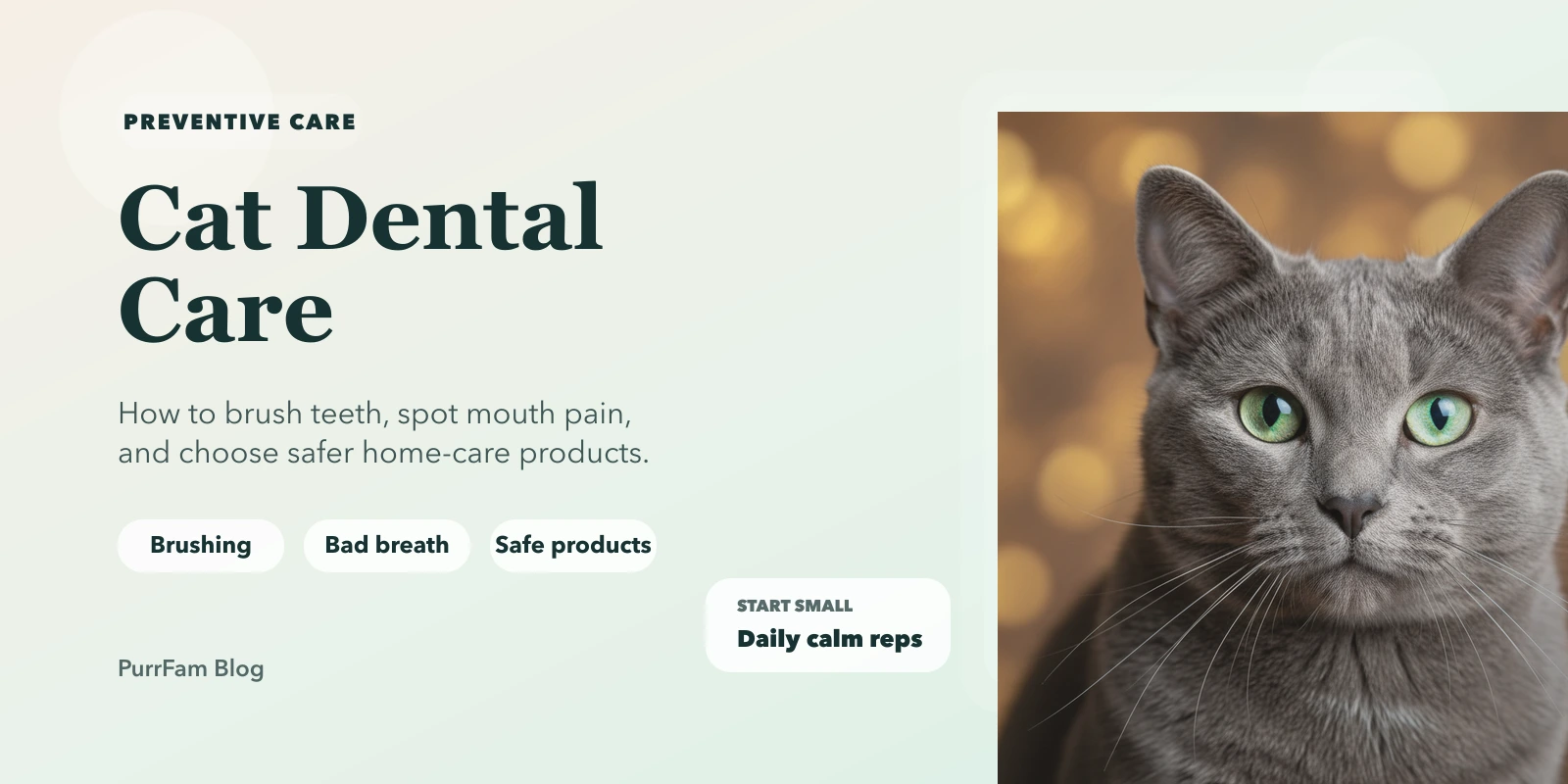
Cat dental care is easy to postpone because the problem usually starts quietly.
It begins as “slightly bad breath.” Then your cat starts chewing on one side. Maybe they drop kibble, back away from crunchy treats, or swallow awkwardly after meals. By the time many owners realize something is wrong, the mouth is already painful.
That is the trap with feline dental disease. Cats are extremely good at hiding discomfort, and oral pain often looks like picky eating, moodiness, slower grooming, or just “getting older.”
This guide covers what cat dental care actually means at home, how to brush your cat’s teeth without turning it into a wrestling match, what products are worth using, and which warning signs mean it is time for a veterinary dental exam.
Why Cat Dental Care Matters More Than Most Owners Think
Cornell’s Feline Health Center reports that 50% to 90% of cats older than four have some form of dental disease. That is not a small niche problem. It is one of the most common health issues adult cats face.
The reason it matters is not cosmetic. Dental disease in cats can cause:
- chronic pain
- inflamed or bleeding gums
- loose teeth
- tooth loss
- reluctance to eat
- weight loss
- reduced grooming
- behavioral changes that look unrelated to the mouth
If your cat already has appetite loss or vomiting along with mouth discomfort, do not assume the mouth issue is minor. Painful oral disease can overlap with problems like cat not eating and throwing up, and both deserve attention.
The Main Dental Problems Cats Get
Cat dental care makes more sense when you know what you are trying to prevent or catch early.
1. Gingivitis
Gingivitis means inflammation of the gums. The gumline becomes red, swollen, and uncomfortable. This is the stage where plaque and bacteria are already causing trouble, but the damage is still more reversible than later disease.
2. Periodontitis
When gingivitis keeps going, it can progress into periodontitis. That means the supporting tissues around the tooth are being damaged. At this point the problem is no longer just “surface tartar.” The structures holding the tooth in place can weaken, and some of that damage cannot be undone.
3. Tooth resorption
This is one of the most important feline-specific problems to understand. Cornell notes that tooth resorption is a common reason cats lose teeth. These lesions can be extremely painful, yet hard to recognize at home. Cats may keep eating while silently compensating.
This is one reason professional dental X-rays matter. You cannot diagnose tooth resorption with toothpaste alone.
4. Stomatitis and severe inflammatory disease
Some cats develop much more aggressive inflammation inside the mouth. These cats may drool, scream when trying to eat, paw at the mouth, or stop grooming properly. They need veterinary treatment, not just a new dental treat.
Signs Your Cat May Have Dental Disease
One of the biggest mistakes owners make is waiting for obvious blood or a visibly broken tooth. Cats often show subtler signs first.
Watch for:
- persistent bad breath
- red or puffy gums
- yellow-brown tartar near the gumline
- drooling
- dropping food while eating
- chewing on one side
- turning the head while chewing
- eating more slowly
- refusing dry food but still licking gravy
- pawing at the mouth
- chattering or jaw trembling when eating
- blood-tinged saliva
- decreased grooming or a messy coat
- weight loss
If the main change is gum color rather than tartar or breath, compare it with our cat gum color chart before deciding how urgent the situation is. Pale, white, blue, or yellow gums are not routine dental-care issues.
If your cat suddenly seems “picky” after previously eating normally, dental pain should be on the list right next to GI upset.
The Best Home Dental Routine for Cats
The gold standard for cat dental care at home is simple to say and harder to build:
brush the teeth regularly, ideally every day.
That does not mean you need a perfect two-minute human-style brushing session. For cats, short and calm beats thorough and combative.
What You Actually Need
- cat-specific toothpaste
- a cat toothbrush, finger brush, or soft infant-style pet brush
- treats or another calm reward
- patience and a realistic ramp-up plan
Do not use human toothpaste. It is not made to be swallowed by cats and may contain ingredients you do not want in their mouth or stomach.
A Practical 7-Day Start Plan
If your cat has never had dental handling before, do not start by forcing the mouth open.
Days 1-2: Build tolerance around the face
Gently touch the cheeks and lift the lip for one second at a time. Reward. Stop before your cat gets annoyed.
Days 3-4: Introduce the toothpaste
Let your cat lick a tiny amount of cat toothpaste from your finger. The goal is not brushing yet. The goal is “this thing is not scary.”
Days 5-6: Wipe or brush only the outer front teeth
Do one short pass on the outside surfaces only. Most plaque builds on the outside of the teeth, especially the upper back teeth, so you do not need to pry the mouth wide open.
Day 7 and beyond: Expand gradually
Work toward short circular motions along the outer surfaces of the canines, premolars, and molars. Ten calm seconds every evening is more useful than one dramatic full-mouth attempt followed by six weeks off.
How to Brush Your Cat’s Teeth
- Pick a calm time, not right after zoomies or before a meal meltdown.
- Sit beside your cat rather than looming directly over them.
- Lift the lip gently.
- Angle the brush toward the gumline.
- Use light circular strokes on the outside of the teeth.
- Focus on consistency, not perfection.
- Stop while the cat is still tolerating it.
If your cat only allows one side at first, that is still a start.
What if My Cat Hates Brushing?
Many cats resist brushing in the beginning. That does not mean dental care is impossible. It means you may need a layered approach.
Options that can still help include:
- dental wipes
- oral gels
- water additives
- VOHC-accepted treats
- dental diets
These are not equal to brushing, but they can be useful backups or add-ons.
The Veterinary Oral Health Council maintains a list of accepted products for cats, and its March 2026 update included categories such as dental diets, treats, wipes, toothbrushes, water additives, gels, and powders. That seal does not mean a product is magical. It means the product met VOHC’s standards for helping reduce plaque, tartar, or both when used as directed.
If you are comparing products at the store, a practical filter is:
- cat-safe only
- easy for your cat to use consistently
- preferably VOHC accepted
- not positioned as a replacement for veterinary exams
What Good Cat Dental Products Look Like
Here is a useful way to think about shopping decisions.
| Product type | Best use | Limitation |
|---|---|---|
| Toothbrush + cat toothpaste | Most direct plaque control at home | Requires training and tolerance |
| Dental wipes | Easier than brushing for some cats | Usually less effective than true brushing |
| Water additives or gels | Helpful for owners who need a low-friction habit | Benefits vary; does not remove existing tartar |
| Dental treats | Good as a support habit when the cat will chew them properly | Not all treats are evidence-based |
| Dental diets | Useful for cats already eating dry food and needing extra plaque control | Not every cat can or should switch diets |
The wrong product is usually one that sounds convenient but has no realistic chance of daily use in your house.
When Bad Breath Is Not “Just Cat Breath”
Bad breath is one of the most commonly minimized symptoms in feline oral health.
Normal cat breath may smell like food. It should not smell rotten, metallic, infected, or strong enough to notice from across the couch.
Persistent bad breath can point toward:
- gingivitis
- periodontitis
- tooth resorption
- oral infection
- retained food and tartar buildup
- less commonly, systemic illness
If your cat has bad breath plus drooling, food avoidance, or weight loss, stop trying to solve it with treats alone and book an exam.
When Home Care Is Not Enough
Home care helps prevent disease and slow buildup. It does not replace veterinary treatment once significant disease is present.
Your cat needs a veterinary dental exam sooner rather than later if you notice:
- visible tartar caked near the gumline
- red, bleeding, or receding gums
- mouth pain
- swelling on the face or under the eye
- loose or broken teeth
- blood in saliva
- sudden refusal to chew
- weight loss or appetite change linked to chewing
Professional treatment may involve:
- oral exam
- anesthetized cleaning
- dental X-rays
- probing around teeth and below the gumline
- extractions if teeth are painful or diseased
That sounds like a lot, but it is exactly why painful dental disease often improves dramatically once it is addressed properly.
How Often Should Cats Get Professional Dental Checks?
Every cat should have the mouth checked during routine veterinary visits. Beyond that, the timing of professional dental cleaning depends on the cat, the tartar load, genetics, diet, and whether painful disease is already brewing.
As a general rule:
- kittens need handling practice and mouth checks, not routine cleanings
- healthy young adults still need gum and tartar monitoring every year
- middle-aged and senior cats often need closer follow-up
- cats with a history of resorption, gingivitis, or stomatitis need more proactive care
If your cat is getting older, use our Cat Age Calculator to understand their life stage. Many oral problems become more relevant as cats move into mature and senior years.
Common Cat Dental Care Mistakes
These are the habits that quietly make oral disease worse.
- waiting for obvious pain before looking in the mouth
- assuming dry food alone cleans teeth
- using human toothpaste
- buying treats without checking whether they are designed for dental benefit
- stopping brushing after one failed attempt
- believing home brushing can fix advanced tartar below the gums
- ignoring appetite or grooming changes because the cat is “still eating something”
Dry kibble is not a reliable stand-in for dental hygiene. Some specially designed dental diets can help, but regular grocery-store kibble is not a toothbrushing plan.
Where Dental Care Fits Into Overall Cat Care
Dental care should sit beside the other core maintenance habits, not below them.
If you already have a grooming rhythm, plug oral care into that routine. Our Cat Grooming Guide is a good anchor for brushing, nail trims, coat checks, and a quick mouth look. If you are newer to cat care, the First-Time Cat Owner Checklist helps you build preventive habits before problems become expensive ones.
The Bottom Line
Good cat dental care is not about making your cat’s teeth look cosmetically perfect. It is about catching pain early, slowing disease before it becomes severe, and building a home routine your cat will actually tolerate.
Start small. Use cat-safe tools. Look for evidence-based support products such as VOHC-accepted options when they fit your cat. And if you see red gums, bad breath, food dropping, drooling, or chewing changes, treat those as real medical clues, not personality quirks.
The best time to start brushing your cat’s teeth was before the tartar built up. The second-best time is now.
Sources: Cornell Feline Health Center — Feline Dental Disease; Cornell Feline Health Center — Tooth Resorption; Veterinary Oral Health Council accepted cat products list, updated March 2026.
Frequently Asked Questions
Daily brushing is the gold standard, but several times a week is still better than doing nothing. Consistency matters more than perfect technique at the start.
No. Human toothpaste can contain fluoride, foaming agents, or xylitol and should not be swallowed by cats. Use a cat-specific toothpaste only.
No. Mild food smell is one thing, but persistent bad breath often points to plaque buildup, gum disease, infection, tooth resorption, or another oral problem that deserves a veterinary exam.
Not really. Dental treats can help reduce plaque or tartar in some cats, especially if they carry the VOHC Seal, but brushing is still the most direct home-care method for the tooth surfaces you can reach.
Watch for drooling, red gums, dropping kibble, chewing on one side, pawing at the mouth, head turning while eating, weight loss, or suddenly avoiding food.
Home brushing helps slow plaque buildup but cannot remove tartar already sitting under the gumline or diagnose tooth resorption. Professional exams, dental X-rays, and cleanings are still important when disease is present.